Glamping with kids sounds like the perfect family trip: outdoor adventure for them, real beds for you. But many parents hesitate, picturing a stressful stay with cold nights, fussy meals and no routine. The good news is that a little planning goes a long way, and most of the worry comes from not knowing what to look for.
This guide walks you through a simple planning path. We’ll cover why glamping often works better with children than you expect, how to choose the right stay type for your family, how to pick a kid-friendly site and location, the best times to book and go, realistic budgeting, and smart packing and preparation tips. By the end, you’ll have a clear plan for a family glamping stay that feels like a treat instead of a logistics nightmare.
Why Glamping With Kids Works Better Than You Expect
If you’ve ever camped in a tent with a toddler, you know the pain points: wrestling an air mattress, midnight bathroom trips across a dark campground, and shivering through the early hours. Glamping removes almost all of that. Most family units come with real beds, some form of heating, and a private bathroom, which means the hardest parts of camping with kids simply disappear.
Kids get the adventure, parents keep the routine
The best part is that children still get everything they love about the outdoors: sleeping under canvas, spotting stars through a window, running around in nature. Meanwhile, parents keep predictable meals and sleep routines because there’s a proper kitchen or dining setup nearby and nobody is sleeping on the ground. A well-rested child makes the whole trip better.
Compared with a hotel, a private tent or dome also gives kids room to move. In a hotel room, every jump on the bed echoes down the hallway. In your own safari tent or dome, kids can play, argue and burn off energy without disturbing other guests, and you can relax instead of shushing them constantly.
Choosing the Right Stay Type for Your Family
Not all glamping stays suit families equally, and the difference matters more with kids than without. The sleeping setup, layout and storage can make or break a week away. A unit that feels romantic for two can feel cramped with two children and a bag of rain gear. Here’s how the main options compare for families, with a fuller breakdown in our guide to comparing glamping stay types.
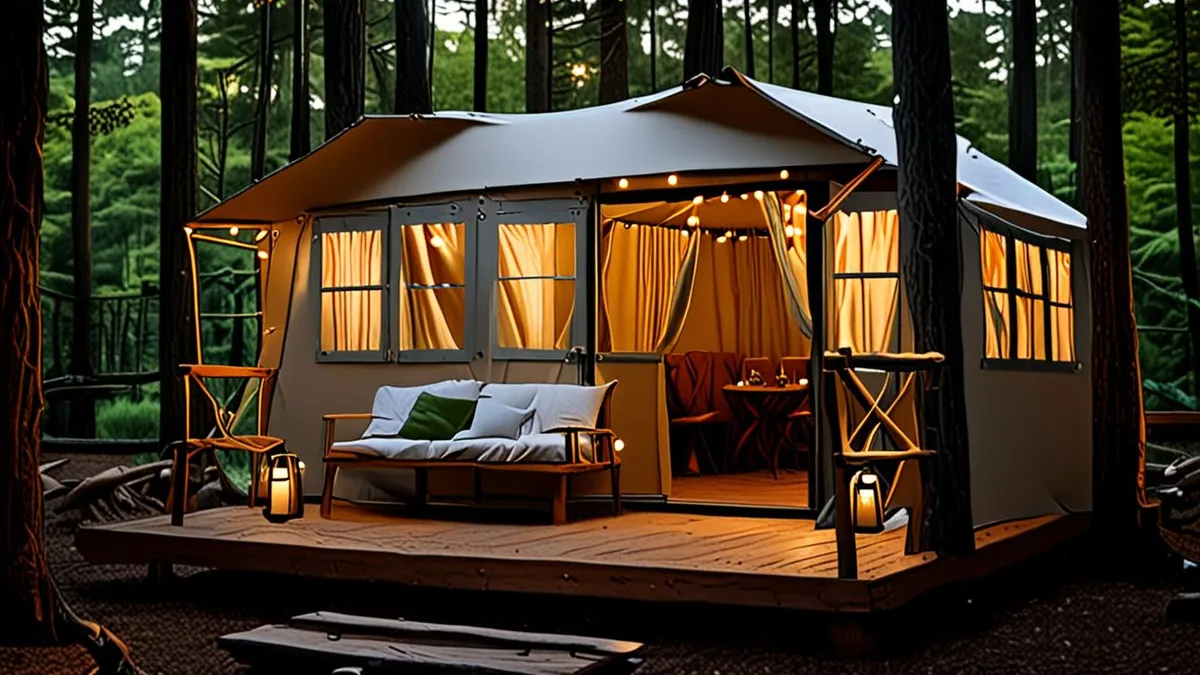
- Safari tents: Usually the top pick for families, with solid floors, separate sleeping areas and space for 4-6 people, so nobody shares a bed with a sibling’s elbows. Many also include a covered porch, which gives kids a shaded play spot on rainy afternoons.
- Yurts and cabins: Everything sits on one level, which makes them safer and easier with toddlers, and the round or rectangular layout keeps kids within sight. Solid walls also block more wind and noise, which helps light sleepers.
- Geodesic domes: The see-through ceiling feels magical for kids aged 6 and up, but domes often have less storage and less privacy, so pack light and expect cozy quarters.
One warning before you book: check the sleeping arrangement chart on the site’s listing. Many units marketed as “family” options actually mean one double bed plus fold-out cots or futons, which works fine for some families and badly for others. Count the actual beds, note which are doubles versus singles, and match that to your kids’ ages and sleep habits before paying the deposit.
It also pays to ask a few direct questions when you reserve. Confirm whether bathrooms are private or shared, whether the unit has heating for cooler nights, and how far you’ll need to walk from parking with your bags. Small logistics like these feel minor on a booking page but become very real when you’re carrying a sleepy toddler across a dark field at bedtime.
Picking a Kid-Friendly Site and Location
Where you stay matters as much as what you stay in, especially on a first trip with young children. Start by keeping the drive short: choose a site within a 1-2 hour drive of home. That way, a restless car ride stays manageable and you can head home early if the weather turns or someone gets sick, without turning it into an expedition.
Look for kid-friendly grounds
Scan the site photos and descriptions for space where kids can actually play: fenced or open meadow areas, shallow swimming spots, playgrounds or animal feeding on-site. A site where children can roam and burn energy safely gives parents a genuine break, while a steep hillside or riverbank setting means constant supervision.
Also confirm the basics before booking. Check whether the site welcomes children and whether certain unit types have minimum ages, since some owners set these for safety or space reasons. And if you have picky eaters, prioritize sites with a kitchen or dining shelter. Being able to prepare a familiar breakfast or a simple pasta dinner at your usual meal times keeps everyone happier than relying on whatever restaurant is nearby. For more on weighing up locations, facilities and owners, see our guide to choosing the right glamping site.
When to Book and When to Go
Family-sized glamping units are the first thing to disappear from any calendar. Safari tents and domes that sleep 4-6 people are limited in number at most sites, so once summer dates and school-holiday windows open, those units go fast. A good rule of thumb is to reserve 3-6 months ahead if you have your heart set on a peak-season week.
If your dates are flexible, aim for late May through June or September. These windows give you the best combination of good weather, lower prices and fewer crowds. Campgrounds feel calmer, kids share playgrounds and fire pits with fewer other children, and hosts often have more time to answer questions and arrange activities.
Shoulder-season trips can also cut nightly rates noticeably compared with July and August peaks. The trade-off is slightly cooler evenings, which is easy to manage with proper layers. If you want help matching the right months to a specific region or stay type, this guide on the best seasons for glamping by destination type breaks it down clearly.
Budgeting for a Family Glamping Trip
Most families should expect to pay somewhere between $150 and $400 per night for a family-sized glamping unit in the US. Where you land in that range depends on the season, the region and the level of amenities. A safari tent with a private bathroom and kitchenette in peak summer sits at the top; a simple yurt in September sits much lower.
Look at what’s included, not just the nightly rate
A higher per-night price can be misleading until you compare it with what you’d otherwise buy. Many stays include linens and towels, and some offer breakfast baskets, firewood or on-site activities like animal feeding and canoe rentals. Add up what a basic tent trip would cost once you rent gear, buy sleeping pads and eat every meal out, and the gap often shrinks fast.
Another smart way to bring costs down is to split a larger unit with another family. Bigger safari tents and lodges that sleep 4-6 people often cost only somewhat more than a two-person unit, so sharing can bring the per-person cost close to what you’d pay at a mid-range hotel. Just agree in advance on bed assignments and shared-meal plans to keep things friendly.
Packing and Preparing Kids for the Trip
Packing for glamping with kids is mostly about managing temperature and routine. Even in summer, nights at many sites can drop 10-15°C below daytime highs, so think in layers: t-shirts for the day, a warm fleece for the evening fire, and proper pajamas plus socks for sleeping. A knit hat for bedtime helps more than parents expect, since much of your body heat escapes through your head while you sleep. Pack an extra set of clothes in a separate bag in case of rain or a spilled drink, and bring a spare blanket even if linens are provided, because canvas tents can feel cooler inside than the evening air suggests.
Before you pack anything, message the site when you book. Many family-friendly sites provide cots, high chairs or kids’ activity kits on request, often at no extra charge, which frees up car space for the things that really matter. Asking early also gives the site time to have items ready in your unit on arrival.
Canvas walls let in more light and sound than a hotel room, so familiar sleep items matter. Bring your child’s favorite blanket or stuffed animal and a small night light so the unfamiliar space feels safe at bedtime. If your kids are early risers, a few quiet toys or a small book in their sleeping area can buy you an extra half hour of rest. Finally, pack a first-evening kit so you’re not rummaging through bags at dusk:
- Headlamps for everyone – one per person, ideally with a red-light mode, since kids love wearing theirs and it keeps hands free for unloading
- Wet wipes in an easy-to-reach pocket – for sticky hands, muddy shoes and quick face cleanups before dinner without a trip to the washroom
- A simple snack stash – crackers, fruit pouches and granola bars that hold everyone over while you set up and cook the first meal
Your Family Glamping Plan at a Glance
Glamping with kids does not have to become a logistics nightmare. The path is simple: start with a stay type that sleeps your whole family comfortably, then keep your first trip close to home—an hour or two in the car at most—so nobody arrives frazzled before the fun begins. From there, the rest falls into place.
Book your unit 3-6 months ahead for summer and school-holiday dates, and aim for late May-June or September when weather is pleasant and crowds are thinner. Budget around $150-$400 per night, pack layers for evenings that run 10-15°C cooler than the day, and request cots, high chairs or kids’ activity kits when you reserve. Follow those steps and your family glamping trip will feel like a break, not a project. If this guide helped you plan your stay, leave a comment or share it with another family ready to trade tent pegs for real beds.